

A cheaper ride may seem like the simpler choice, but business travel involves more than booking quickly. That is why C-level executives switch from rideshare to dedicated chauffeurs when coordinated pickups, professional presentation, and a well-planned itinerary matter as much as the journey. A chauffeur service is not automatically the right fit for every trip: rideshare can work for an unplanned local journey, while scheduled business travel often benefits from greater consistency and attention to client impressions.
It is reasonable to weigh cost first. A useful comparison also considers how pricing is structured, how the ride fits an executive’s schedule, and what clients experience on arrival. This article explains where each option fits, how professional presentation can shape a business interaction, and when planned transportation makes sense for airport transfers, meetings, and corporate events. You will have a clearer basis for choosing the right approach for each business journey.
Key Takeaways
- Choose transportation according to the trip: on-demand rideshare can suit spontaneous local travel, while prearranged service supports a coordinated business itinerary.
- Compare more than the fare: consider how pricing is structured and whether the ride supports your schedule, preparation time, and professional presentation.
- A consistent arrival experience can shape client impressions, especially for airport pickups and important meetings.
- Consider corporate transportation, airport transfers, or hourly service when a business journey calls for planned, dedicated transportation.
Is a chauffeur service better than rideshare for business travel?
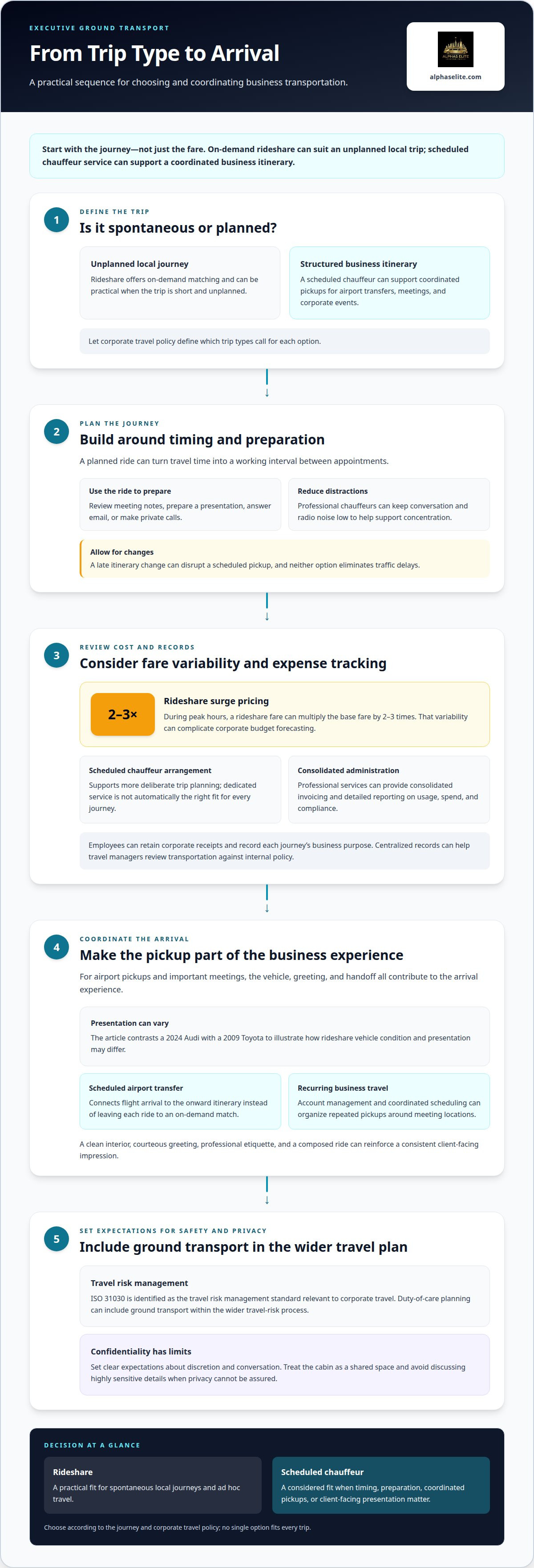
A chauffeur service suits planned executive travel when timing, preparation, and coordination matter. Rideshare remains useful for spontaneous trips, but the best choice depends on the journey and corporate travel policy.
Productivity During Executive Travel
Productivity during executive travel means using journey time for focused work or preparation. A planned ride can give an executive space to review meeting notes, prepare a presentation, answer email, or make private calls. For example, a ride between an airport and a board meeting can become a working interval rather than a gap between appointments. Professional chauffeurs can keep conversation and radio noise low, helping limit distractions. This matters when a meeting agenda is demanding or a client call requires concentration.
Rideshare surge pricing can multiply a base fare by 2-3 times during peak hours. For corporate travel budgets, that variability can complicate forecasting, particularly when trips coincide with heavy demand. A scheduled chauffeur arrangement may support more deliberate trip planning, while rideshare can remain practical for unplanned local journeys. Company policy can assign each option to the trip type it serves best.
Expense documentation also shapes the decision. Professional chauffeured services can provide consolidated invoicing for multiple travelers and trips, plus detailed reporting on usage, spend, and compliance. These records can help travel managers review transportation against internal policy. The International Organization for Standardization identifies ISO 31030 as the travel risk management standard relevant to corporate travel. Duty-of-care planning can therefore include ground transport within the wider travel-risk process.
Confidentiality and Chauffeur Service Risks
Driver discretion means protecting private business conversations and travel details from unnecessary exposure. This matters during executive trips involving negotiations, board discussions, or sensitive client matters. A dedicated driver may become familiar with recurring schedules, so clear expectations about discretion and conversation help maintain professional boundaries. Executives should still treat the cabin as a shared space and avoid discussing highly sensitive details when privacy cannot be assured.
The main drawback is that dedicated service is planned, so it may be less suitable for a short, unplanned local trip. Rideshare offers on-demand matching, while a scheduled chauffeur requires coordination around pickup times and itinerary changes. A late change can disrupt the plan, and neither option eliminates traffic delays. Corporate teams can use chauffeurs for structured journeys and retain rideshare for ad hoc travel.
Corporate image and professional presentation
A vehicle is part of the arrival experience, not merely a way to reach an address. A 2024 Audi and a 2009 Toyota illustrate how rideshare vehicle condition and presentation can vary. For an executive meeting, that variation may affect how composed and consistent the arrival feels. Chauffeur services make presentation part of a planned corporate journey, alongside pickup timing and discretion.
Consistency matters when employees welcome clients or investors at an airport. A scheduled airport transfer links the flight arrival to the onward itinerary instead of leaving each ride to an on-demand match. The vehicle, greeting, and handoff at the destination all contribute to a professional first impression. A coordinated pickup can also reduce avoidable planning just before a meeting.
Corporate accounts can bring recurring bookings and administration into one process. Companies can use dedicated account management and coordinated scheduling for frequent travelers or teams. For example, an executive assistant arranging a roadshow can plan repeated pickups around meeting locations instead of placing each request separately. That structure helps keep the travel plan organized as appointments shift.
Centralized billing can make expense administration clearer across several travelers and trips. Consolidated invoices group transportation activity, while detailed reporting can show usage, spend, and compliance. A finance team can then reconcile a trip by traveler, date, and business purpose, following its own expense policy. Employees should retain corporate receipts and record the purpose of each journey, especially when airport transfers connect to client meetings.
These practices do not make every chauffeured journey the right choice. An unplanned short trip may be simpler by rideshare, while recurring executive travel can benefit from coordinated bookings and centralized records. A corporate travel policy can define which trips call for scheduled chauffeur service, what documentation employees submit, and how discretion is expected during client-facing arrivals.
Chauffeur professionalism and client impressions
For client-facing business travel, the driver and vehicle shape the arrival experience. Professional service can make the journey feel consistent from pickup to destination.
Driver Standards and Client Impressions
Driver standards are the practices that shape each passenger interaction. Professional chauffeurs are attentive to customer service, etiquette, discretion, and hospitality. Their conduct matters when an executive represents a company before a client meeting. A clean interior, courteous greeting, and composed ride can reinforce a polished executive image. Well-maintained vehicles and professional chauffeurs also help create a consistent impression across recurring business travel.
For example, a company arranging travel for visiting clients may value a consistent experience at each pickup. A luxury vehicle alone does not create professionalism: the driver’s manner, the vehicle’s condition, and attention to the schedule all contribute. These details matter most when transportation is the first in-person interaction of a business visit.
Meet-and-Greet and Arrival Experience
A meet-and-greet is a planned airport welcome that connects a flight arrival with the onward journey. A chauffeur can greet travelers and assist with luggage, helping clients move from the terminal to the vehicle with less coordination. This can feel more considered than finding an on-demand ride after landing.
For an executive welcoming an investor, the pickup is part of the visit’s first impression. A professional greeting, luggage assistance, and a direct transition to the destination give the arrival a clear sequence. The same approach can support client visits, roadshows, and corporate events, where arrival logistics influence how the day begins.
Reliability, Punctuality, and Availability
A dedicated chauffeur is arranged in advance for a planned trip, while rideshare services usually match passengers with an available driver on demand. That distinction supports advance coordination, but neither option eliminates traffic delays or every schedule change. Rideshare drivers may cancel unexpectedly, and arrival times can change, complicating a tightly timed itinerary.
Scheduled pickups make sense when a flight, meeting, or client arrival anchors the day. Rideshare can be more practical for spontaneous travel when immediate matching is the priority. The choice depends on whether the journey is planned or arises in the moment. Executives can match transportation to the itinerary, using advance coordination for high-stakes arrivals.
Fixed pricing compared with rideshare surge pricing
A predictable transportation budget depends on more than the initial fare. For an airport pickup before an important meeting, compare fare variability, booking certainty, and the factors that shape the cost of a scheduled journey.
Rideshare Fares and Fixed Chauffeur Pricing
Rideshare pricing can change with demand, while a dedicated chauffeur booking can have an agreed trip price. That distinction helps corporate teams budget for planned travel and understand the transportation commitment before pickup. Chauffeur pricing depends on the trip and is provided after a quote request; route, timing, and service duration affect the cost. A scheduled airport transfer and an extended itinerary may therefore be priced differently.
For a meeting with a fixed start time, advance pricing can make the transportation budget easier to plan. Rideshare may still suit an unplanned local trip, especially when immediate booking matters more than fare predictability. Compare the likely trip pattern, not just the first displayed fare: traffic, pickup location, and changing demand can affect the final rideshare charge. A corporate travel policy can distinguish planned journeys from ad hoc rides.
Surge Costs and Cancellation Risks
Surge pricing is a demand-driven fare increase that can make a rideshare trip less predictable during busy periods. This matters when an executive needs an airport pickup or must arrive before a client meeting. A fare that changes during booking can complicate expense planning, while a scheduled arrangement can make the trip easier to budget in advance.
Cancellations are another budget consideration. Rideshare drivers may cancel unexpectedly, and arrival times can change; arranging another pickup adds uncertainty to a tightly timed itinerary. A prearranged chauffeur booking aligns pickup with the planned schedule, though traffic and itinerary changes still affect travel. Finance teams can record the business purpose and retain receipts for either option, then review actual transportation spending against company policy.
For a planned airport journey, arrange an airport transfer with Alphas Elite as part of a more predictable travel plan.
Alphas Elite
Alphas Elite helps executives plan business transportation around the demands of each journey. When a scheduled pickup, coordinated itinerary, or polished client arrival matters, Corporate Transportation and Airport Transfers offer a planned alternative to on-demand rideshare. Hourly Service suits a day with several meetings, while Medical Appointments supports travel to scheduled appointments.
The choice need not be the same for every trip. Rideshare may suit an unplanned local journey; dedicated chauffeur transportation can better fit a defined schedule, executive presentation, and organized ground travel. Consider the trip’s purpose, timing, and the impression you want to create, then choose the service that fits.
For help planning executive transportation, contact Alphas Elite.
Make Your Next Business Journey Deliberate
Understanding why C-level executives switch from rideshare to dedicated chauffeurs starts with a practical question: what does this trip need to accomplish? For an unscheduled local journey, flexibility may take priority. For travel tied to a client arrival, important meeting, or carefully coordinated day, a planned ride can better support the experience you want to create.
Use that distinction to guide your next transportation decision. Consider the itinerary, the importance of a composed arrival, and how much coordination the day requires. The right choice supports your priorities without adding unnecessary complexity.
For a considered approach to executive travel, contact Alphas Elite to discuss your travel. A clear plan can help your next journey begin with confidence.
Frequently Asked Questions
How do chauffeurs support executive security?
Chauffeur arrangements can support executive security through vetted professional drivers, licensed and insured vehicles, and planned trip coordination. For an executive traveling between a New York office, hotel, and airport, a defined itinerary can help travel coordinators manage pickup and destination details. These measures support a corporate security program, but they do not replace separate personal security protocols the organization uses.
Is chauffeur service worth it for airport transportation?
It can be worthwhile when a flight arrival needs coordinated ground transportation. For JFK, LGA, EWR, or Teterboro pickups, Alphas Elite monitors flights in real time and includes 60 minutes of complimentary wait time for airport pickups. That can help align the pickup with an early landing or delay. The value depends on whether these arrangements matter more than booking an on-demand ride after arrival.
Why do executives choose chauffeurs over rideshare?
Executives often choose a chauffeur when a trip calls for coordinated transportation rather than a single point-to-point ride. For example, an executive with several appointments can use Hourly Service for a multi-stop itinerary, keeping the vehicle and driver available during the reserved period. Rideshare may suit an isolated, unplanned journey; planned chauffeur travel can better fit a day of linked appointments.
Why do C-level executives switch from rideshare apps to dedicated chauffeur services?
Why C-level executives switch from rideshare to dedicated chauffeurs often comes down to managing an entire itinerary, not just one pickup. An executive assistant, for example, can coordinate transportation around an airport arrival, scheduled meetings, and a later departure. Corporate Transportation or Hourly Service can support planned journeys across New York, Westchester, and Connecticut when the day spans multiple destinations.
What are the typical costs of executive chauffeur services versus rideshare in the United States?
There is no single typical cost for every US journey. Rideshare fares can change with demand and trip conditions, while chauffeur pricing depends on the trip and is provided after a quote request; route, timing, and service duration affect the cost. For a useful budget comparison, consider the itinerary and the possibility of changing rideshare fares instead of treating one estimate as universal.
How do chauffeur services protect executive privacy and confidentiality?
Privacy depends on discreet service and how trip details are handled. Alphas Elite corporate accounts include NDA-compliant confidentiality and dedicated account management. Executives can also reserve sensitive discussions for private settings and avoid sharing confidential details during a ride. For a board meeting or client negotiation, coordinating transportation around the itinerary can reduce the need to discuss sensitive plans during pickup or en route.


